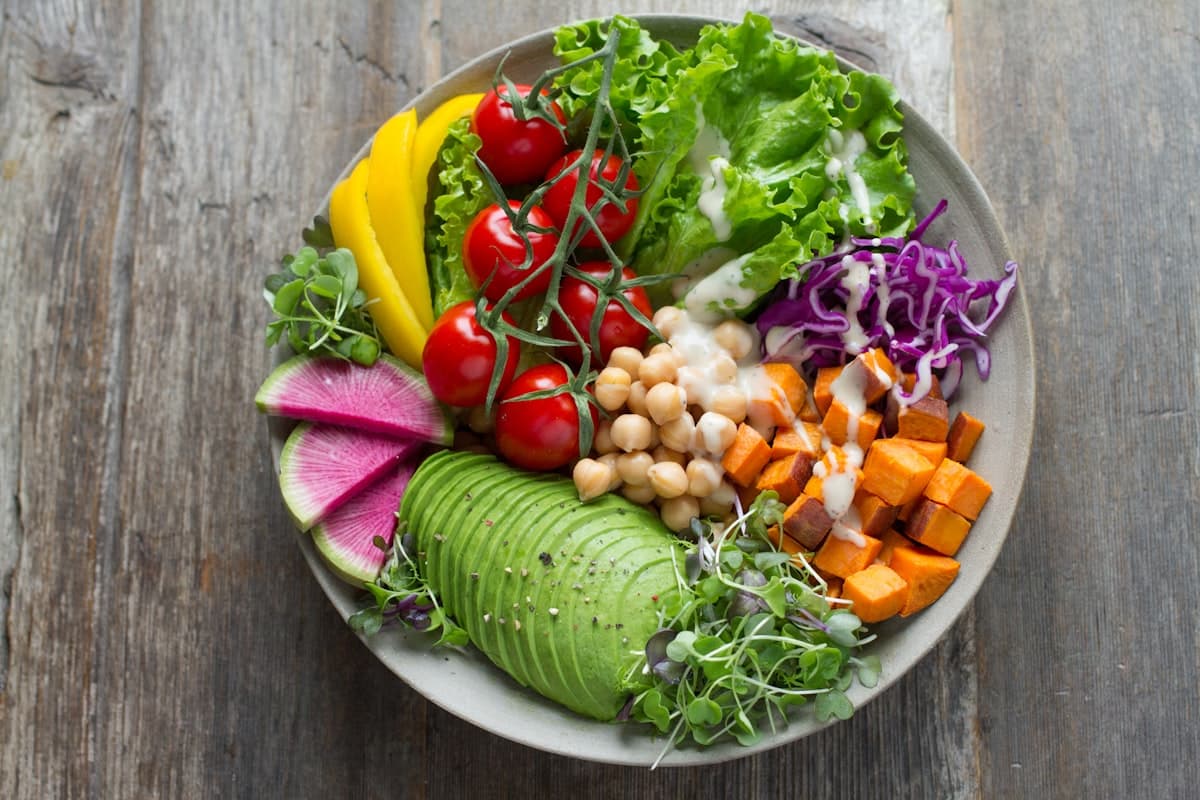

The hand method: nutrition without calorie counting.
Most of my clients come to me having already tried calorie counting. The ones who haven't are the lucky ones, because they don't have to unlearn it.
The typical story goes something like this. They downloaded an app. They weighed their food for a week. They felt productive. By week three, they were tired of logging everything. By week six, the app was still on their phone, but they'd stopped opening it. By the time we talked, they were convinced they "just couldn't stick to it" and that the problem was them.
The problem wasn't them. The method was too precise for a life that isn't precise.
What I use instead: the hand method
The hand method isn't new. Versions of it have been taught by dietitians and coaches for decades. It's the simplest durable nutrition approach I've ever coached, and it's the one I start almost every client on.
The whole system fits on a business card.
- A palm of protein. The thickness and width of your palm, not including fingers. Think chicken, steak, fish, eggs, tofu, Greek yogurt.
- A fist of vegetables. The size of your closed fist. Anything green, colorful, or leafy.
- A cupped hand of carbs. What fits in a single cupped hand. Rice, potatoes, oats, bread, fruit, beans.
- A thumb of fat. The size of your thumb, tip to base. Oils, nuts, nut butters, avocado, cheese.
That's the entire measurement system. No apps, no scale, no macro math.
How much per day
Most women aim for roughly four palms of protein, five or more fists of vegetables, one to two cupped hands of carbs per meal (more on training days), and one to two thumbs of fat per meal.
Most men aim for roughly five palms of protein, five or more fists of vegetables, two to three cupped hands of carbs per meal, and one to two thumbs of fat per meal.
These are starting points. I adjust them per client based on goals and activity.
> The best nutrition system isn't the most precise one. It's the one you can still run on a Tuesday night in a hotel room.
Why hands, specifically
There's a reason this works better than almost any other portable approach.
It scales with your body automatically. A 5'4" woman has smaller hands than a 6'2" man. Her palm portion of protein is smaller. Her cupped hand of carbs is smaller. The method is self-calibrating. You never have to adjust a number as you gain or lose weight.
It's always with you. You can't forget your hand. You can't run out of batteries. It works at a restaurant in a country you've never been to.
It's hard to overthink. You can't argue with your hand for 20 minutes. The whole decision takes three seconds.
It builds real nutrition intuition. After a few weeks of checking your plate against your hand, you start to see a palm-sized protein portion without needing to check. That knowledge stays with you when the app doesn't.
A review of portion-estimation research found that hand-based portion guides produce estimates roughly 85-95% as accurate as food weighing and calorie counting [1], at a tiny fraction of the effort.
Why I start with protein specifically
The piece of the hand method I emphasize first with every client is the palm of protein. Not because the other parts don't matter, but because protein is what I call the lead domino.
When you hit a protein target, several things happen without your effort:
- Your satiety hormones (PYY, GLP-1) get stronger. You feel full longer.
- Your ghrelin (the hunger hormone) gets suppressed.
- Your blood sugar stabilizes, which means the 3pm crash and the Oreo run after it get quieter.
- You spontaneously reduce total intake by roughly 400 calories a day without restricting anything [2].
That last number is the one that always surprises clients. They don't have to diet. They just have to hit protein. The rest adjusts on its own.
The additive rule
Here's the shift that makes this actually work. Most nutrition plans start by telling you what to stop eating. Cut carbs. Avoid sugar. No snacks after 8pm. The restriction approach triggers a predictable loop: deprivation, craving, binge, guilt, stricter rules, quit.
The hand method starts by telling you what to add. Add a palm of protein to breakfast. Add a fist of vegetables to lunch. Add a cupped hand of carbs around your workout.
When the good stuff goes up, the other stuff naturally falls away. You only have so much room in one stomach. Fill it with protein and vegetables first and there's less room for the stuff you were probably trying to cut anyway.
Add before you subtract. That's the whole philosophy.
How to start this week
1. Pick one meal to apply it to first. Breakfast is the easiest, because it's the meal with the lowest decision load and the highest leverage. If you hit protein at breakfast, the research shows you'll spontaneously make better choices later in the day [2].
2. Aim for one palm of protein at that meal for seven days. That's the whole goal. Don't worry about the other parts yet.
3. Once breakfast is automatic, add lunch. Same rule. One palm of protein. Then a fist of vegetables.
4. Let dinner catch up when the first two are solid. Most of my clients find that by the time breakfast and lunch are locked in, dinner has already shifted without effort.
What this isn't
It isn't a magic fat loss plan. It isn't going to optimize a bodybuilder's macros. It isn't the right tool for someone prepping for a powerlifting meet or hitting specific targets for a physique contest.
For everyone else, which is most of the people I coach, it's the best nutrition system I've seen. Simple. Durable. Honest about what biology actually needs.
Print the list. Stick it on your fridge. Start with breakfast tomorrow.
Sources
- [1] Precision Nutrition portion research, internal meta-review, on hand-portion accuracy vs. weighed food. Approximately 85-95% agreement with controlled measurement.
- [2] PriorityMe Research & Evidence Bank, *Protein as the Lead Domino for Nutrition Behaviour Change*, April 2026. Review of Protein Leverage Hypothesis literature finding roughly 400 kcal/day spontaneous reduction with protein targeting.
- Leidy et al., high-protein breakfast effect on evening snacking, American Journal of Clinical Nutrition.
Stop reading. Start doing.
Find your starting point in 5 minutes.
Take the free Movement Check and see exactly what to work on first.
Take the Movement Check