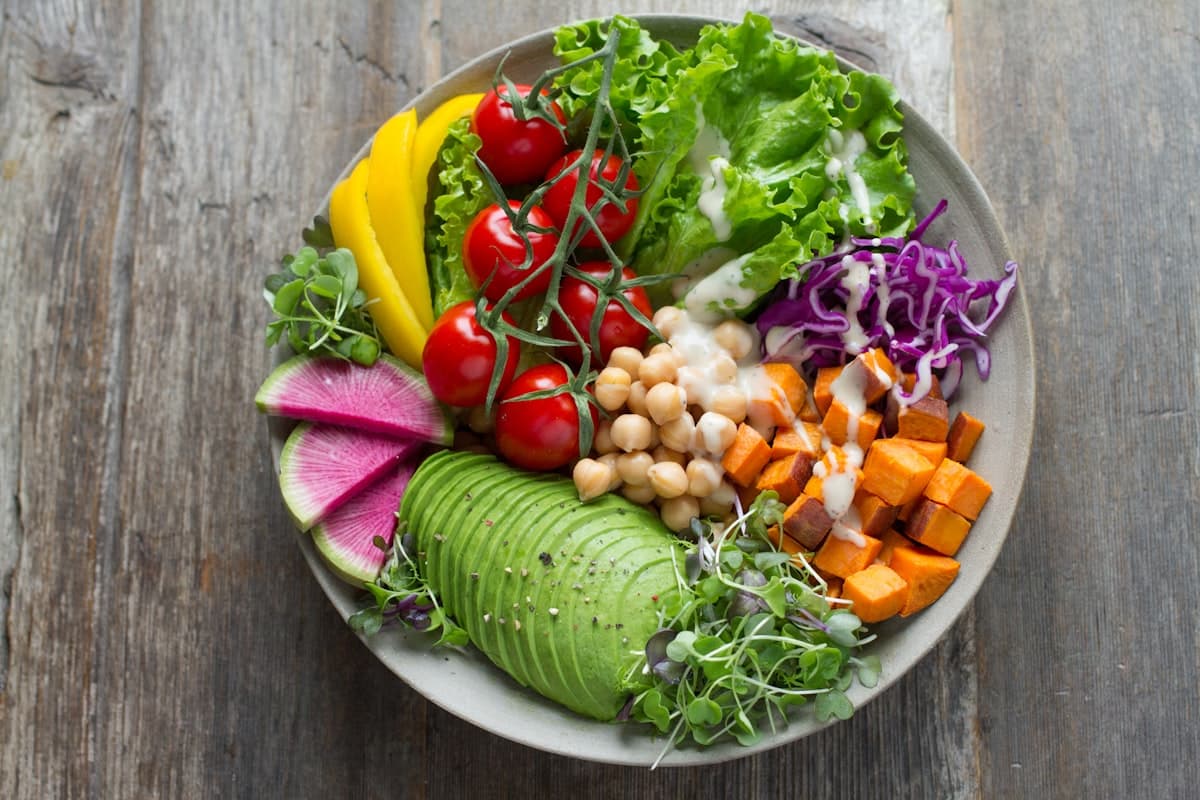

Eating out without blowing your week.
I coach a lot of people who travel for work, have business dinners, live in cities with great food, and don't want to spend the rest of their lives eating chicken and rice out of a container. They come to me thinking the price of good nutrition is giving up eating out. I tell them it's not, and then I have to prove it.
Here's how I actually coach clients through eating out without wrecking the rest of the week.
The reframe first
The single biggest shift is mental, not tactical. Most people treat eating out as "a cheat meal" or "off the plan." That framing is the problem. If the restaurant is off the plan, then eating in a restaurant requires breaking the plan, which means the restaurant becomes either a failure event or a permission slip to stop caring.
Here's the reframe I use: there is no off the plan. There's only eating, and how you do it.
A restaurant meal is a meal. Your plan has to accommodate it or your plan is fragile and unrealistic. Your goal isn't to avoid restaurants. It's to eat in them the same way you eat at home: find a protein, add some vegetables, don't drown the plate in hidden calories.
> Your plan has to work at a restaurant or it's not a plan. It's a science experiment that requires a laboratory.
The restaurant algorithm
I give clients a simple decision flow that works at almost any restaurant.
Step 1: Find the protein. Look at the menu and find the protein source. Steak, chicken, fish, pork, tofu, eggs, beans. Prioritize dishes where the protein is clearly the star, not where it's a small topping on a carb-heavy base.
Step 2: Add vegetables. Most restaurant entrees come with some vegetables. If they don't, add a side of them. Ask for them steamed or sautéed, not deep-fried.
Step 3: Pick one "indulgence" per meal, not all of them. This is the move that makes eating out actually sustainable. You don't have to eliminate everything you enjoy. You just pick one thing per meal to actually enjoy. Bread and butter? Great, have some, skip the heavy starch side. Pasta? Great, skip the bread. A rich dessert? Great, have a smaller portion of the carb at dinner. One indulgence, fully enjoyed.
Step 4: Watch the liquid calories. A cocktail, a beer, a glass of wine, a sweetened coffee — these add up fast and they don't fill you up. I'm not telling clients to skip the drink. I'm telling them to count the drink as one of their indulgences and to stay aware.
That's the whole algorithm. It works at steakhouses, diners, Italian, Thai, Mexican, sushi, anywhere.
What most people get wrong
There are two predictable failure modes I see.
Failure mode 1: "I'll just eat whatever and get back on track tomorrow." This one fails because it sets up the same guilt loop we talked about in an earlier post. The meal itself isn't the problem. The post-meal spiral is. The fix is to eat the restaurant meal intentionally, not as a free-for-all.
Failure mode 2: "I'll be really strict and order the boring healthiest thing." This one fails because it trains you to hate eating out. You start dreading social meals. You feel deprived. You crack two days later and eat three restaurant meals in a row to compensate. The fix is to order something you're actually going to enjoy, using the algorithm.
The sustainable middle is: you order something you like, you apply the algorithm, you eat until you're satisfied, and you move on. No guilt. No compensation. No "getting back on track," because you never left.
A real example
A client who travels constantly for work used to lose two pounds of muscle every time he traveled for more than four days. His pattern was to eat strictly for the first day, get tired of being "on the plan," and then eat everything for the rest of the trip while feeling terrible about it.
We redesigned his travel eating to look like this:
- Breakfast: Eggs and protein wherever he was. If there was a hotel buffet, he'd do an omelette with a side of smoked salmon.
- Lunch: One big meal with a clear protein source. Salad with grilled chicken. Burger with the bun if he wanted the bun, without it if he didn't.
- Dinner: Whatever the client dinner was, following the algorithm. Usually a steak or a fish course with vegetables. A glass of wine if he wanted it. Skipping dessert most of the time, not as a rule but as a preference.
That's it. He stopped losing muscle on trips. His weight held steady. He still enjoyed the meals. The plan survived contact with reality because the plan was designed to.
The travel-specific tip
If you travel enough that eating out becomes the default rather than the exception, there's one more thing I'd add. Bring a sleeve of protein powder and a shaker bottle. A scoop of whey after a flight or between meetings gets you to your protein target when the restaurant meals don't. It's not elegant. It works.
How to start this week
1. Decide in advance that your next restaurant meal is "on the plan." Not an exception. Not a cheat. A meal.
2. Read the menu through the algorithm. Find the protein. Add vegetables. Pick one indulgence.
3. Enjoy it. Really enjoy it. The point isn't to suffer. The point is to eat like an adult who knows what they're doing and has no guilt about it.
4. Move on when the meal is over. No compensation. No extra workout. No "starting fresh." Just tomorrow, the same way you would have eaten tomorrow anyway.
Restaurants are not the enemy. Sustainable nutrition looks like enjoying dinner out on a Tuesday and being completely on track on Wednesday morning. If your plan doesn't allow for that, you need a better plan.
Sources
- PriorityMe coaching archive on nutrition flexibility and long-term adherence.
- Precision Nutrition, hand portion method for restaurant and social eating.
- PriorityMe Research & Evidence Bank, Protein as the Lead Domino, April 2026.
Stop reading. Start doing.
Find your starting point in 5 minutes.
Take the free Movement Check and see exactly what to work on first.
Take the Movement Check