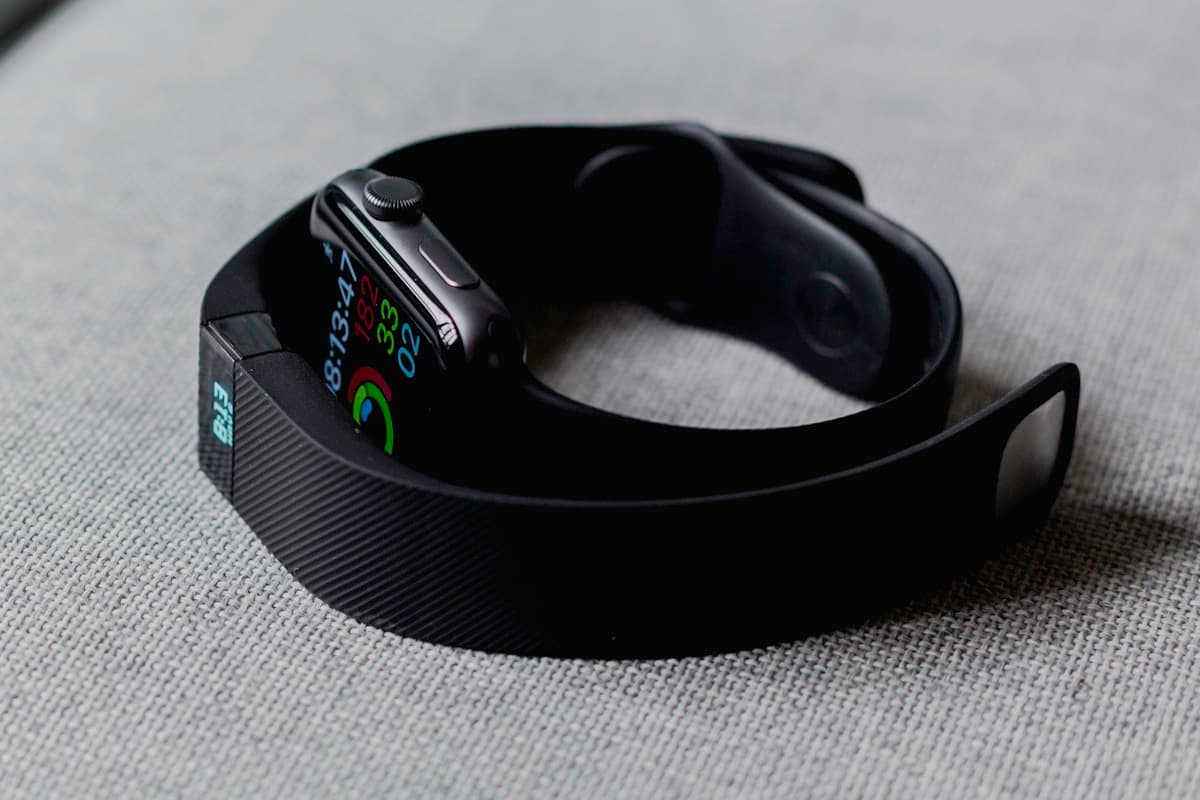
Wearables vs wisdom: what your Oura ring can't tell you.
Every few weeks, a new client comes to me with a dashboard of data they don't know what to do with. Their Whoop says their HRV is low. Their Oura says their sleep score is 62. Their Apple Watch says they haven't closed their rings. They're looking at more information about their body than any generation in history has had access to, and they're asking me the same question every time: what does any of this actually mean for me?
I wrote in an earlier post about why wearables alone don't change behaviour. This post is about the specific piece wearables can't replace: coaching wisdom. The layer between raw data and a specific decision you make next Tuesday. Here's what that looks like.
What wearables are excellent at
Let me be clear about what I'm not arguing. Wearables are extraordinary measurement tools. I use one. I recommend them to almost every client. The data they produce is better than any self-report, any fitness test, any coach intuition. A Whoop knows your HRV with more accuracy than you'll ever know it. An Oura knows your sleep architecture better than your subjective "I slept okay." Apple Watch heart-rate data has flagged atrial fibrillation in people who didn't know they had it and saved lives.
Measurement matters. I'm not here to argue with measurement.
> The question isn't whether to measure. It's what you do with the measurement once you have it.
Where wearables hit a wall
Here's what wearables cannot do, no matter how sophisticated they get.
They can't put the data in context. Your recovery score is 45. Is that because you trained hard yesterday and it's expected? Because you traveled? Because you're coming down with something? Because your body is still adapting to a new stimulus? The same number means completely different things in different contexts. The wearable gives you the number. Context is outside the wearable's knowledge.
They can't know what matters to you. Your sleep is short, and the wearable flags it. But you're in the middle of a project that closes in 10 days, and you've decided that the short sleep is a reasonable trade-off for that window. A wearable doesn't know the project exists. A coach does.
They can't adjust your plan. Your HRV is trending down. The wearable tells you. It doesn't reduce tomorrow's training load, reschedule your heavy squat day, or remind you to eat an extra 20g of protein today. Those are coaching decisions. The wearable points at the problem. Someone has to do something about it.
They can't read between the lines. A good coach knows when a client's data is telling one story and their tone is telling another. "My sleep is fine, training is fine, food is whatever" is the tone of a client who's about to quit. A wearable will show the numbers holding steady right up until the client disappears.
They can't hold you accountable. The wearable doesn't care if you ignore its notification. It just keeps measuring. A coach notices the pattern of ignored notifications and asks about them.
The five questions wearables can't answer
When a client shows me their data, these are the five questions I ask that the wearable can't answer on its own.
1. Is this number normal for you, or unusual? Wearables try to compute personalized baselines, but they don't know your life. A drop in HRV after a vacation is not the same as a drop in HRV in the middle of a busy work week.
2. Which other variables moved at the same time? Sleep dropped, but did the training increase? Did you drink more alcohol this week? Did you travel? The patterns live in the correlations, not in any single metric.
3. Is this a trend or a blip? One bad night of sleep is noise. A week of declining sleep with declining recovery and declining mood is a pattern. The difference matters, and wearables are bad at telling you which is which.
4. What does this tell us to change in the next 7 days? This is the one that actually matters. Every data point should end in a decision, not a feeling. "Reduce training volume 15%." "Move bedtime 30 minutes earlier for 5 nights." "Add a walk at 2pm." Wearables don't produce decisions. Humans do.
5. Does this match what you're telling me about your life? Sometimes the data says one thing and the client says another. Both matter. The integration is a coaching job.
A real example
A client of mine had three weeks of declining sleep and declining recovery scores. Her wearable flagged both, every day, in red. She saw the red. She kept going because she was "sure it was fine."
When we caught it during a check-in, I asked one question: "What's changed in your mornings since last month?" She told me her commute had shifted earlier because of a schedule change at work, and her wake time had moved from 6:30 to 5:30, but her bedtime hadn't moved.
The wearable had caught the effect. It hadn't caught the cause. The cause was a schedule change the wearable didn't know about. Once we identified it, the fix was obvious: shift bedtime earlier to match the new wake time, or find a way to push the wake time back. She chose the first. Her recovery was green again in 10 days.
Without the wearable, I wouldn't have seen the drop. Without the coaching conversation, she wouldn't have acted on it. Both had to be in the loop.
How to use your wearable well
If you own a wearable and you want more out of it than a dashboard you check every morning:
1. Pick one metric that actually matters to you. Not all of them. Just one. Sleep consistency is almost always the right one to start with.
2. Ask a question every time a number moves. "What changed in the last 48 hours?" Make this a habit. Movement in the data is always caused by something. Find the cause.
3. Turn insights into decisions. Don't just notice the data. Decide what changes in your next 7 days because of it. "HRV trending down, I'll reduce training intensity by 15% this week and re-check." That's useful. "HRV is low, that's concerning" is not useful.
4. Get a second set of eyes. The data is more useful when someone else sees it too. A coach, a group, an AI assistant with coaching context. You'll catch patterns you'd otherwise miss.
5. Don't obsess. Check your data once a day, not once an hour. Constant checking produces anxiety, which reduces HRV, which triggers more checking. Daily review is plenty.
The real value
The wearable's value isn't in the numbers it produces. It's in what happens after the numbers. If you're not acting on the data, the wearable is a $400 decoration. If you have someone helping you act on the data, the wearable becomes a force multiplier.
Wisdom is the layer that turns measurement into change. That layer isn't going to live in your wrist anytime soon.
Sources
- Journal of Medical Internet Research, 2023-2024, studies on wearable device adoption and long-term behaviour change outcomes.
- PriorityMe Research & Evidence Bank, Psychology of Accountability in Coaching.
- PriorityMe coaching archive on wearable-integrated coaching for busy professionals.
Stop reading. Start doing.
Find your starting point in 5 minutes.
Take the free Movement Check and see exactly what to work on first.
Take the Movement Check